
Table of Contents
Introduction

Facebook Ads lead generation helps businesses connect with potential customers through targeted campaigns, engaging creatives, lead forms and direct communication. With the right Facebook Ads strategy, small businesses, manufacturers, startups and B2B brands can build a more structured sales pipeline.
In this guide, we will explore how Facebook lead generation works in 2026, seven practical strategies, campaign setup, budget planning and ways to improve lead quality.
What Is Facebook Lead Generation?
Facebook lead generation is a digital marketing process that uses paid advertisements on Facebook and Instagram to collect inquiries from potential customers.
Businesses can capture leads through Meta Instant Forms, website landing pages or messaging channels such as WhatsApp, depending on their campaign setup and available objectives.
For example, a Surat-based manufacturer can run Facebook lead generation ads to attract wholesale buyers, while a digital marketing agency can collect consultation requests from businesses interested in growing their online presence.
The objective is not simply to increase the number of leads but to reach relevant prospects who are more likely to become paying customers.
How Facebook Lead Generation Ads Work in 2026
Facebook lead generation campaigns run through Meta Ads Manager, where businesses can select campaign objectives, define audiences, create advertisements and measure results.
The typical process includes:
- Audience selection: Identify potential customers based on location, relevant audience signals and available targeting options.
- Ad creation: Develop engaging images, videos, headlines and offers that address customer needs.
- Lead capture: Collect inquiries through Instant Forms, website forms or messaging experiences.
- Lead follow-up: Contact prospects through calls, email or WhatsApp with appropriate consent.
- Performance tracking: Monitor lead quality, conversion rates and cost per qualified lead.
Meta also provides AI-supported advertising tools and placements, including Advantage features and Reels advertising. The exact options available depend on the campaign objective, account and current Ads Manager interface.
Benefits of Facebook Ads for Small Businesses
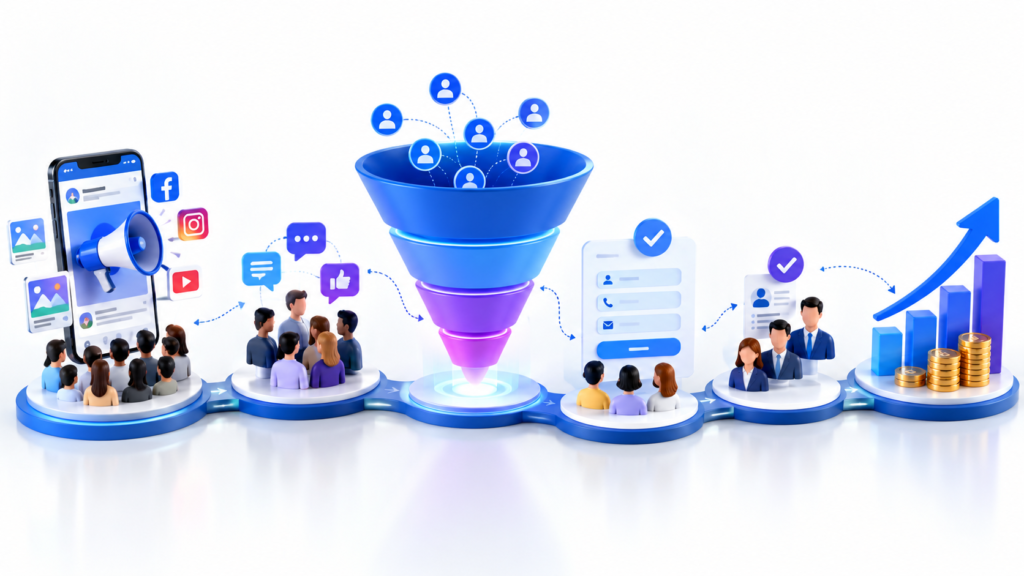
Facebook Ads for business can support different marketing goals, from local awareness to generating sales inquiries.
- Targeted reach: Reach relevant audiences in selected cities, regions and markets.
- Flexible budgets: Set campaign budgets according to business goals and available resources.
- Multiple ad formats: Use images, videos, carousels, Reels and lead forms.
- Direct inquiries: Allow potential customers to submit their details or start conversations.
- Remarketing: Re-engage people who have interacted with your website or social media content, subject to audience availability and privacy requirements.
- Measurable results: Track campaign spending, leads, qualified inquiries and conversions.
These benefits depend on the quality of the offer, campaign setup, audience, creatives and follow-up process.
7 Effective Facebook Ads Strategies for Lead Generation
1. Use Facebook Lead Ads and Instant Forms
Facebook Lead Ads allow potential customers to submit their contact details through forms within Facebook or Instagram, reducing the need to visit an external website.
For example, a real estate business can collect property consultation requests, while a manufacturer can gather wholesale inquiries.
To improve form quality:
- Ask only for the information your sales team needs.
- Include a relevant qualifying question, such as location or product requirement.
- Use a higher-intent form option where available.
- Clearly explain what happens after submission.
- Include an appropriate privacy policy link.
A shorter form may increase submissions, while additional qualification can help your team identify relevant prospects. Monitor both lead volume and lead quality.
2. Use Click-to-WhatsApp Campaigns
WhatsApp is an important communication channel for many Indian businesses. Click-to-WhatsApp advertisements let interested users initiate a conversation directly with a business.
This approach can be useful for:
- Local service providers receiving quotation requests
- Retailers answering product inquiries
- Manufacturers discussing specifications and bulk orders
- Consultants scheduling appointments
Use a clear call to action and a helpful opening message. Respond promptly and make sure any automated communication follows applicable consent and messaging requirements.
3. Improve Facebook Ads Targeting
Facebook Ads targeting helps businesses reach people who may be interested in their products or services.
Start with a clear customer profile:
- Location and serviceable area
- Relevant interests or available audience signals
- Customer needs and purchase intent
- Existing customer or website engagement data, where permitted
For example, a B2B manufacturer could test campaigns in selected industrial areas and use messaging focused on bulk supply, specifications and business requirements.
Broad targeting may also be worth testing when Meta’s delivery tools have sufficient useful signals. Compare approaches using qualified leads and actual sales outcomes rather than assuming that narrower targeting is always better.
4. Create Engaging Ad Creatives
Creative quality plays an important role in attracting attention and communicating the offer.
Test different creative formats, such as:
- Short videos demonstrating a product or service
- Problem-and-solution visuals
- Product demonstrations
- Customer testimonials with appropriate permission
- Regional-language creatives for relevant audiences
For example, a digital marketing agency could create a short video explaining common reasons businesses receive low-quality leads.
Make the benefit clear, use a strong opening, and include one specific call to action. Meta provides mobile-focused Reels ad formats that can help businesses present their message in vertical video placements.
5. Use Retargeting and Custom Audiences
Not every potential customer is ready to make a decision after seeing one advertisement.
Retargeting allows businesses to reconnect with eligible people who previously interacted with their brand, such as website visitors, video viewers or social media engagers.
A practical funnel could be:
- Introduce your brand through educational content.
- Show relevant product or service information to engaged audiences.
- Present a consultation, demo or quotation offer to interested prospects.
- Follow up with leads who have expressed interest.
Custom Audiences and Lookalike Audiences can be considered when sufficient eligible first-party data is available and the necessary permissions are in place.
6. Optimize Landing Pages and Conversion Tracking
A website landing page is useful when potential customers need more information before submitting an inquiry.
A focused landing page should include:
- A clear headline describing the offer
- Benefits relevant to the target audience
- Concise service or product details
- Trust signals that can be verified
- A simple inquiry form
- A clear call to action
Make sure the page works well on mobile devices and loads efficiently.
Where appropriate, configure Meta Pixel and Conversions API to support conversion measurement. Check event accuracy, avoid duplicate event counting and respect user consent and applicable privacy requirements.
7. Connect Your Campaigns With CRM and Follow-Up
Generating leads is only one stage of the sales process. Businesses also need a reliable way to contact prospects and manage inquiries.
Integrate lead forms with a CRM or another suitable lead management system, where supported. Assign leads to the relevant sales representative, record follow-up activity and track lead status.
A simple lead management workflow can include:
- New inquiry received
- Initial contact attempted
- Prospect qualified
- Meeting or quotation scheduled
- Converted or closed
Review which campaigns produce qualified opportunities and sales, not just inexpensive form submissions.
How to Create a Facebook Lead Generation Campaign Step by Step

Follow this practical process to launch a Facebook lead generation campaign:
- Define your goal: Decide whether you want consultation bookings, quotation requests, product inquiries or another measurable outcome.
- Set up Meta Ads Manager: Confirm that your business account, Facebook Page and ad account are configured correctly.
- Choose your campaign objective: Select an appropriate leads-focused setup and conversion location.
- Define your audience: Choose relevant locations and test suitable audience settings.
- Create your ads: Prepare different creative and copy variations with a clear offer.
- Set up lead capture: Configure an Instant Form, messaging destination or landing page.
- Set a realistic budget: Start with a test budget that can generate enough useful data for evaluation.
- Launch and monitor: Review delivery, inquiries, lead quality and tracking accuracy.
- Optimize based on results: Refine the offer, creative, audience or form based on meaningful performance data.
Avoid making frequent changes based on very small amounts of data. Evaluate campaigns over an appropriate period for their budget, sales cycle and conversion volume.
Facebook Ads Budget and Cost Per Lead in India
The cost of Facebook advertising for lead generation varies by industry, location, audience, offer, competition and campaign setup.
There is no single cost per lead that applies to every business. A local service provider, an education company and a manufacturer may experience very different campaign costs and lead-to-sale rates.
To estimate a workable budget:
- Define how many qualified leads you want to generate.
- Estimate an acceptable cost per qualified lead using your own sales data.
- Allocate a test budget that allows you to compare meaningful campaign results.
- Review the cost of qualified opportunities and acquired customers, not only raw leads.
Cost per lead (CPL) = Total advertising spend ÷ Number of leads generated
For better decision-making, also calculate cost per qualified lead and customer acquisition cost. These metrics help determine whether your Facebook lead generation campaign supports your business goals.
Common Facebook Ads Mistakes to Avoid
Businesses can waste advertising budgets when campaigns are built without clear goals or proper measurement.
Avoid these common mistakes:
- Targeting audiences without understanding their actual needs
- Using generic creatives and unclear offers
- Collecting unnecessary information through long forms
- Ignoring mobile landing page performance
- Failing to contact leads consistently
- Optimizing only for low CPL instead of qualified leads
- Making frequent campaign changes without enough evidence
- Failing to track inquiries through to sales
A structured testing and reporting process helps businesses identify what needs improvement.
How to Measure Facebook Ads Performance
Track the following metrics to understand campaign performance:
| Metric | What it measures |
|---|---|
| CTR | How often people click after seeing the ad |
| CPC | Average cost per click |
| CPL | Average cost per lead |
| Qualified lead rate | Share of leads meeting your criteria |
| Lead-to-customer rate | Share of leads becoming customers |
| Customer acquisition cost | Cost to acquire a customer |
| ROAS | Revenue attributed to advertising relative to ad spend |
Review these metrics together. A campaign with a low CPL may still be unprofitable if the leads do not convert into customers.
Facebook Ads Lead Generation for Indian Businesses
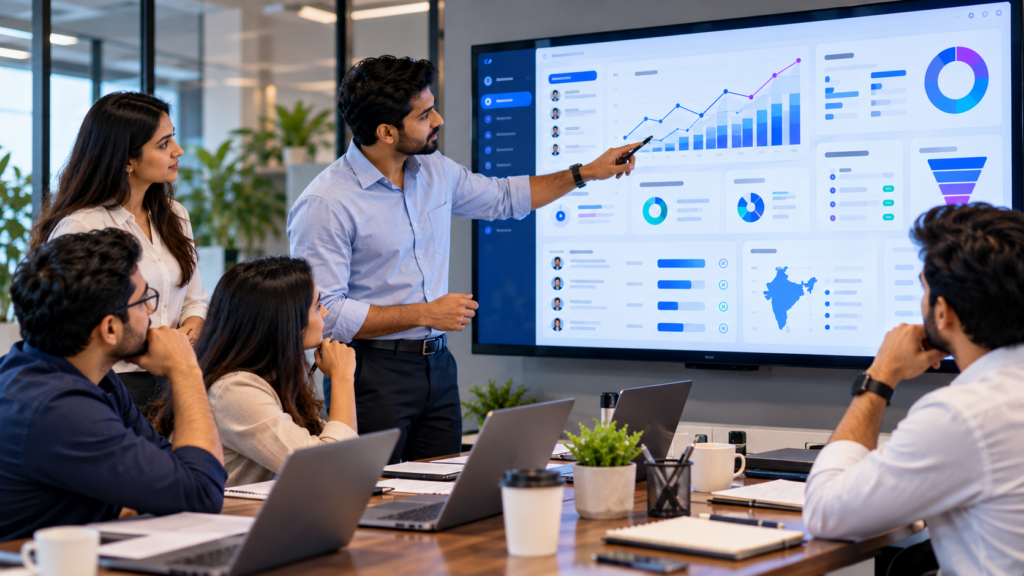
Facebook Ads can be adapted to different business models in India.
Manufacturers and B2B businesses: Promote product catalogs, bulk-order inquiries, quotations and business consultations.
Small and local businesses: Target serviceable locations and generate appointment requests, calls or WhatsApp inquiries.
D2C brands and retailers: Use product demonstrations, promotional campaigns and remarketing to support customer acquisition and sales.
Startups and service providers: Test different offers, educational creatives and consultation campaigns to identify relevant potential customers.
Use language, creative formats and offers that match your audience. Measure actual inquiry quality and sales outcomes to decide where to invest further.
How Badiya Brand Can Help
Managing Facebook Ads requires a coordinated approach to strategy, creative development, audience selection, tracking and lead follow-up.
Badiya Brand provides Facebook Ads services to help businesses plan and manage campaigns based on their goals, target audiences and budgets.
Our services include campaign strategy, lead ads, creative development, retargeting and performance reporting. Businesses can also explore related lead-generation solutions to support landing pages and inquiry management.
If your business wants to improve its lead generation process, contact Badiya Brand to discuss your goals and campaign requirements.
Conclusion
Facebook Ads lead generation in 2026 requires more than simply launching an advertisement. Businesses need a clear offer, relevant audience, engaging creatives, an effective lead capture process and consistent follow-up.
From Instant Forms and Click-to-WhatsApp campaigns to retargeting and CRM integration, each part of the campaign should support the journey from initial interest to a qualified sales opportunity.
By measuring lead quality, conversion rates and customer acquisition costs, businesses can make more informed advertising decisions and improve their campaigns over time.
Facebook Ads can help businesses generate inquiries through lead forms, messaging and website campaigns. Results depend on audience relevance, offer quality, campaign setup and lead follow-up.
Costs vary according to industry, location, competition, audience and campaign objective. Start with a controlled test budget and calculate your actual cost per qualified lead rather than relying on a universal benchmark.
Start by defining your ideal customer, relevant locations and business requirements. Test suitable audience signals and creative approaches, then use campaign performance and lead quality to refine targeting.