
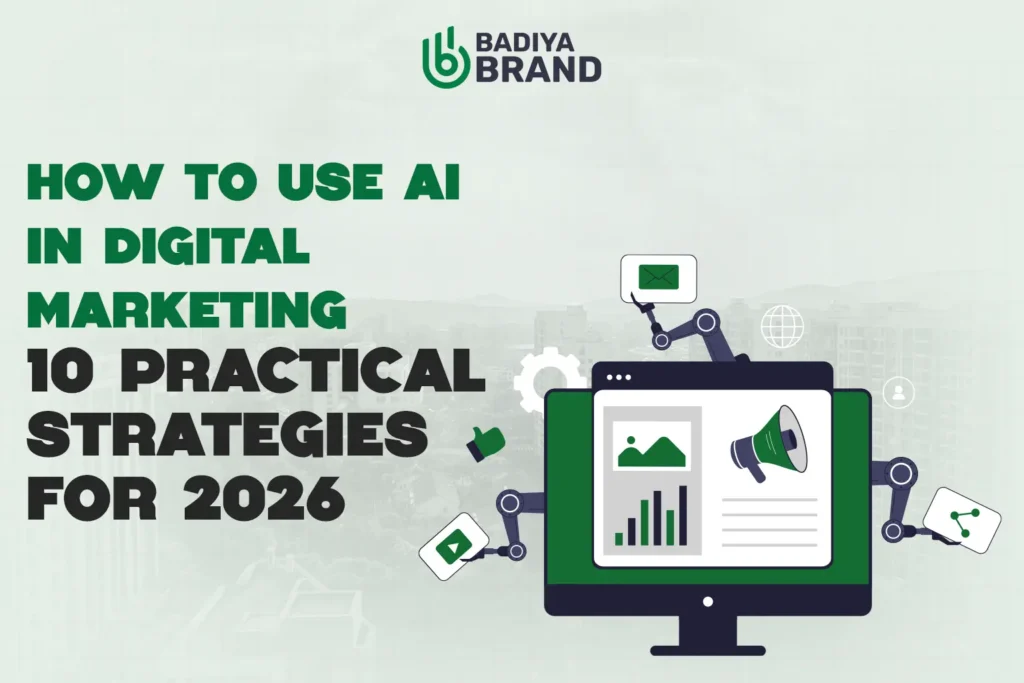
How to Use AI in Digital Marketing: 10 Practical Strategies for 2026
Table of Contents Introduction Picture a marketer at 9 AM. Fifteen tabs open. A campaign report due, three client emails unanswered, and a content calendar that’s basically a wish list at this point. Sounds familiar? That was digital marketing before AI walked in and, honestly, changed the game in ways most of us didn’t fully see coming. By 2026, AI isn’t some shiny add-on anymore. It’s infrastructure. Teams using it report saving close to 6 hours a week on average, and marketers everywhere are quietly (or not so quietly) rebuilding their digital marketing strategy around it. This blog breaks down exactly how to use AI in digital marketing, not in theory, but with 10 practical strategies you can actually apply in 2026. No fluff. Just what works, what doesn’t, and where to start. What Is AI in Digital Marketing? Let’s keep this simple. Artificial intelligence in marketing basically means using machines that learn from data to do things humans used to do by hand, writing ad copy, predicting what a customer might buy next, sorting leads, scheduling posts at the “right” time. Not magic. Just pattern recognition at a scale no human team can match. Online marketing used to run on gut feeling and spreadsheets. A manager would guess which subject line might work better, run it, wait a week, check results. Slow. Internet marketing today doesn’t wait a week. AI tools analyze thousands of data points while you’re still having your morning chai, and they adjust campaigns in real time. The shift isn’t small, it’s a complete rewiring of how work gets done, and most marketers who resisted it in 2023 are the ones scrambling to catch up now. 10 Practical AI Strategies You Can Use Right Now Here’s the part you actually came for. Below is exactly how to use AI in digital marketing, broken into ten practical moves, not hypothetical, not “someday.” Some of these you’ve probably tried. Others might surprise you. 1. Content Ideation and Topic Research. Staring at a blank doc, trying to think of a blog topic, is nobody’s favorite Monday. Tools like ChatGPT or Claude can scan search trends and competitor gaps in minutes, giving you a shortlist instead of a blank page. It still needs a human to pick the good ideas from the mediocre ones, but the brainstorm itself gets faster. 2. AI-Powered Writing and Editing. Drafting first versions, cleaning grammar, adjusting tone for different platforms, AI handles the grunt work well. The catch? Raw AI output reads stiff half the time. Good teams use it as a first draft partner, then a real person rewrites it so it sounds, well, human. If you want help building a content strategy around this, that’s honestly where most brands get stuck. 3. Personalization at Scale. Netflix recommends shows. Amazon recommends products. Your email tool can do the same thing, recommend the right offer to the right person based on what they clicked last time. This used to take a data science team. Now it’s built into most email platforms. 4. AI Chatbots for Leads and Support. A chatbot that answers “what’s your pricing” at 2 AM doesn’t get tired, doesn’t need chai breaks, and doesn’t lose its patience with the fifth repeated question. It won’t close every deal. But it captures leads marketing teams used to just lose overnight. 5. Predictive Analytics. This one’s quietly powerful. AI looks at past customer behavior and predicts what’s coming, who’s about to churn, who’s ready to buy, which campaign will likely underperform before you even launch it. Fewer surprises at month-end. 6. AI in SEO. Keyword research, content clustering, SERP gap analysis, tools now do in an hour what used to take a week of manual digging. AI in SEO directly ties into any online marketing plan, since search traffic still drives a huge chunk of leads for most businesses. 7. Ad Campaign Optimization. Google and Meta’s smart bidding systems already use AI to adjust budgets automatically mid-campaign. Marketers who fight this and insist on manual bidding are, frankly, leaving money on the table. 8. Social Media Scheduling and Trend Prediction. Beyond just scheduling posts, newer tools flag which trends are about to blow up, giving brands a short window to jump in before everyone else does. 9. AI Visual Content Creation. Need a quick product mockup or a social graphic? AI image tools cut hours of design work into minutes. Not a replacement for a skilled designer on big campaigns, but great for quick-turnaround needs. 10. Marketing Automation Workflows. Email sequences, lead scoring, retargeting triggers, AI ties all of it together so campaigns run without someone manually pushing every button. This is where most of the time-saving actually happens, quietly, in the background. Benefits of Using AI in Digital Marketing So why bother? A few reasons stand out once you actually use this stuff for a month or two. Time and Cost Efficiency Teams report getting hours back every week, hours that used to go into manual reporting, repetitive A/B test setup, or copying data between spreadsheets. Fewer people, same output. Sometimes more output honestly, which isn’t always comfortable to admit but it’s true. Better Personalization and Customer Experience Customers don’t want to be generic. They want to feel like a brand gets them. AI makes that possible at a scale no human team could pull off manually, sending the right message, to the right person, at the right time, without a dozen people manually segmenting lists. Data-Driven Decision Making Guesswork is slowly dying. Decisions that used to rest on a manager’s gut feeling now rest on actual patterns in the data. That doesn’t mean intuition is useless, it still matters, but it’s no longer the only thing steering the ship. You don’t need twenty tools. You need two or three that actually fit your workflow. For content and copy, ChatGPT and Claude remain the go-to choices, fast, flexible, decent at matching brand tone once you train them a bit. For SEO and keyword