Table of Contents
Why 2026 Is the Tipping Point for AI Marketing
It’s 10 PM. You’re staring at six tabs, Google Ads, HubSpot, Canva, a half-written blog post, Slack pinging you about next week’s campaign, and a spreadsheet that just refuses to add up. Sound familiar? That’s where most marketers live in 2026, somewhere between burnout and a never-ending to-do list.
Here’s the thing though. AI marketing isn’t some far-off buzzword anymore, it’s the quiet reason some brands are pulling ahead while others are still manually scheduling tweets.
Businesses that figured out AI marketing automation early? They’re not working harder. They’re working smarter, letting machines handle the repetitive grind while humans focus on strategy and creativity.
This blog breaks it all down, how AI is reshaping SEO, ads, content, and lead generation, and how you can actually use it without losing the human touch that makes marketing, well, marketing. If you’re exploring tools and strategies for your own brand, our team at digital marketing resources might be worth a look too, honestly.
Grab a coffee. Let’s get into it.

What Is AI Marketing Automation, Really?
Let’s keep this simple. At its core, this kind of automation means using artificial intelligence to handle marketing tasks that used to take humans hours, sometimes days. Think email sequences that write themselves. Ad budgets that adjust in real time. Content ideas generated before you’ve even had your morning chai.
It’s not the same as old-school marketing automation, the kind you might remember from a decade ago. Traditional tools followed rigid “if this, then that” rules. You set the trigger, it sent the email. Simple, but dumb, honestly. AI-native platforms are different, they learn. They predict what a customer wants before the customer knows it themselves.
At its heart, marketing automation with AI runs on three things: data, smart models, and workflows. Data is the fuel, customer behavior, purchase history, browsing patterns. The models, think machine learning algorithms, chew through that data and spot patterns no human could catch fast enough. And workflows? That’s where the automation actually happens,triggering the right message, to the right person, at exactly the right moment.
Sounds fancy. It is, a little. But the goal is boring, actually: save time, reduce guesswork, and let your team focus on the stuff that actually needs a human brain.Why Businesses Are Rushing to Adopt It in 2026
So why now? Why is everyone suddenly obsessed with AI marketing in 2026 like it’s the latest iPhone?
A few reasons, really. Customers expect instant replies now. Nobody waits 24 hours for an email response anymore, they want an answer in minutes, sometimes seconds. AI-powered marketing automation makes that possible, running chat responses and personalized offers around the clock, even while your team sleeps.
Then there’s the team size problem. Marketing departments haven’t exactly grown bigger in the last few years, budgets stayed flat, workloads didn’t. One person is often doing the job three people used to do. AI agents for marketing step in here, quietly picking up tasks like reporting, basic content drafts, or ad optimization that would otherwise eat up entire afternoons.
And honestly? There’s a bit of FOMO involved too. When a competitor starts outranking you on Google or running ads that convert twice as well, you start asking questions. Fast. Nobody wants to be the brand still doing things the old way in 2026.Automating SEO with AI
SEO used to mean guesswork. You’d throw a keyword into a blog post, pray to the Google gods, and wait weeks to see if it worked. Not anymore.
Keyword Research & Topic Clusters
AI tools for marketing automation have completely changed how keyword research works. Instead of manually digging through spreadsheets, AI scans search intent, competitor gaps, and related questions in seconds. It builds entire topic clusters, groups of related content that signal authority to Google, faster than any human team could draft a content calendar. Honestly, it’s a little unfair how fast it works now.
Content briefs, once a tedious writing task, are also AI-assisted now. Tools suggest headings, word counts, related keywords, even questions people are actually asking on Google. It doesn’t replace a good writer. But it sure saves them from staring at a blank page for an hour.Technical SEO & Search Generative Experience Shifts
Here’s where things get interesting, and a bit scary for some marketers. AI crawlers now audit entire websites in minutes, flagging broken links, slow pages, duplicate content, missing meta tags. Stuff that used to take a developer days to find.
But there’s a bigger shift happening too. Search itself is changing. Google’s AI-generated summaries, and similar features across other search engines, mean fewer clicks are going to traditional blue links. Brands now need strategies that optimize not just for rankings, but for being the source these AI summaries pull from. It’s a new game, frankly, and the rules are still being written.
If you want help navigating AI-powered SEO automation for your own site, that’s exactly the kind of thing worth exploring early.
Automating Paid Ads with AI
Remember manually adjusting bids every morning? Checking which ad set was bleeding money at 2 AM? Yeah, that era is mostly over.
Smart Bidding & Audience Targeting
AI-powered marketing automation handles bidding now, adjusting budgets in real time based on what’s converting and what isn’t. It doesn’t sleep, doesn’t get tired, doesn’t second-guess itself at 11 PM. Platforms like Google Ads and Meta already use predictive algorithms to find audiences that look like your best customers, sometimes finding segments a human planner would’ve never thought to target.
AI-Generated Creatives & Real-Time Optimization
Ad copy and creative variants? AI generates dozens in minutes. Headlines, descriptions, even image concepts, tested against each other automatically. The winning combination gets more budget; the losing ones quietly fade out. No hurt feelings, no office politics, just data deciding what works.
This is a big part of what AI marketing automation promises in 2026: less manual tweaking, more actual strategy work. Marketers aren’t babysitting dashboards all day anymore. They’re interpreting results and deciding where the brand should go next.Automating Content Creation & Distribution
Content is where AI gets both loved and hated, depends who you ask.
AI writing assistants genuinely help with first drafts, outlines, even repurposing old content into new formats. A single blog post can become five LinkedIn posts, a short video script, and an email newsletter, all pulled apart and rebuilt by AI tools for marketing automation in a fraction of the time it used to take.
But here’s where it falls short, and this matters. AI still struggles with genuine brand voice. It can mimic tone if you train it well, but it doesn’t “get” your brand the way someone who’s lived inside it for years does. That subtle joke your brand makes, the specific way you address customer complaints, AI approximates it. Humans perfect it.
That’s really why human-in-the-loop content still wins. The best setups use AI to draft, research, and structure, then a real person edits for voice, accuracy, and nuance. This isn’t just about quality either. It ties directly into E-E-A-T, the framework Google uses to judge content trustworthiness: Experience, Expertise, Authoritativeness, Trust. A fully AI-written blog with nobody checking facts? That’s a risky bet in 2026’s search landscape.
Our own approach at BadiyaBrand leans heavily on this AI for speed, humans for judgment. Seems to work better that way.Automating Lead Generation & Nurturing
Leads used to fall through cracks constantly. Someone fills a form, nobody follows up for three days, and by then they’ve already signed with a competitor. Frustrating, right?
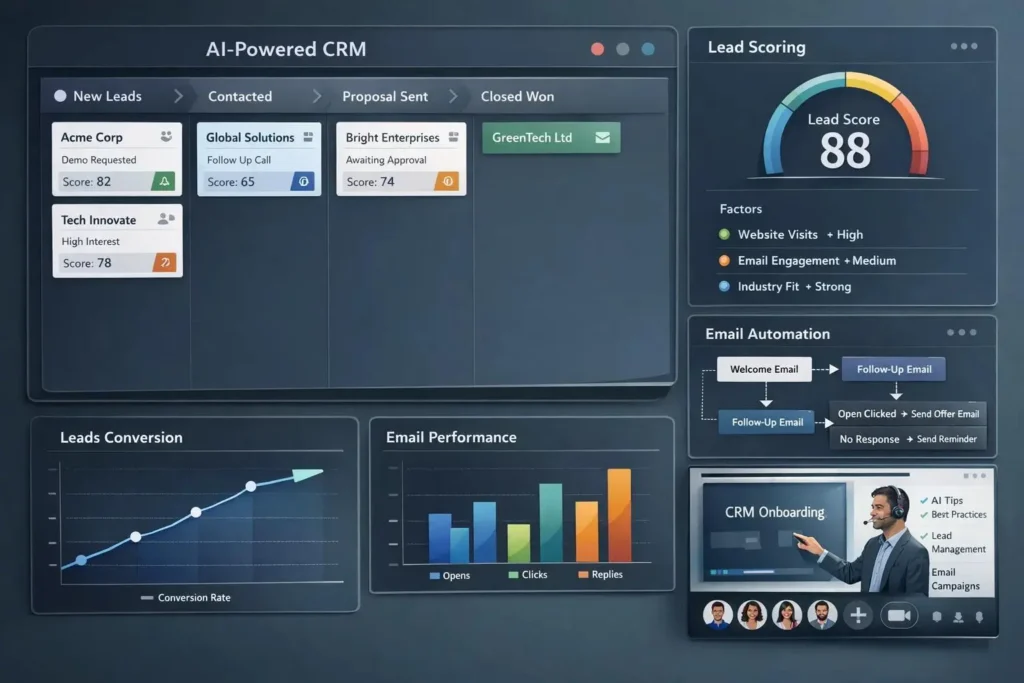
AI lead generation tools fix a lot of this. Chatbots now qualify leads instantly, asking the right questions, routing hot prospects straight to sales, and politely nudging the “just browsing” crowd toward helpful resources instead. No human needed at 2 AM for that first conversation anymore.
Predictive lead scoring is another piece of this puzzle. Instead of guessing which leads are worth chasing, AI models rank them based on behavior patterns pulled from thousands of past conversions. It’s eerily accurate sometimes, honestly.
Email sequences, too, have gotten smarter. AI agents for marketing can trigger the right message at the right moment, a reminder here, a discount nudge there, based on what the lead actually does, not a rigid calendar someone set three months ago. If you’re exploring AI lead generation workflows for your own funnel, this is usually the easiest place to start.
Still, personalization at scale has a trap. Overdo it, and customers feel like they’re talking to a robot, because, well, they are. The brands winning at AI marketing in 2026 are the ones who use automation for timing and logistics, but keep the actual message feeling human.
Choosing the Right AI Marketing Automation Stack
Questions to Ask Before You Buy
Before signing up for yet another subscription, ask a few basics. Does this tool integrate with what you already use, your CRM, your ad platforms, your content calendar? Does it actually save time, or just add another dashboard to check? And can your team realistically learn it without a two-week training detour?
A common mistake businesses make is buying automation tools because a competitor uses them, without checking if it fits their actual workflow. Shiny object syndrome is real, and it’s expensive. Our own comparison of automation tools can help narrow the list before you commit to one.Build vs. Buy Decision
For smaller businesses, off-the-shelf tools usually make more sense, faster setup, lower cost, proven results. But larger companies with specific, complex workflows sometimes benefit from custom AI solutions built around their exact data and processes. There’s no universal right answer here. It depends on budget, team size, and how unique your marketing problems actually are.
Challenges & Risks Nobody Talks About
Not everything about automation is sunshine and efficiency. Let’s be honest for a second.
Data privacy sits right at the top of the list. AI tools need data, lots of it, to work well. But with regulations tightening across regions, businesses have to be careful about what they collect, how they store it, and how transparent they are with customers about it. One misstep here and trust evaporates fast.
Over-automation is a quieter risk, but just as damaging. Ever gotten five emails from the same brand in one day because their automation triggered wrong? Annoying, right? Too much automation, without human oversight, turns helpful marketing into spam real quick.
And then there’s hallucination, AI confidently making things up. A chatbot promising a discount that doesn’t exist. An AI-written blog citing a statistic that’s completely wrong. These mistakes happen more than companies like to admit, which is exactly why checking AI output before it goes live isn’t optional. It’s survival.What's Next Trends Beyond 2026
If 2026 feels fast, buckle up. What’s coming next is faster still.
Agentic AI is the big one to watch in marketing. Instead of tools that need constant prompting, we’re heading toward AI agents that manage entire campaigns independently, setting budgets, writing copy, analyzing results, and adjusting strategy, almost like a junior marketer who never sleeps or asks for a raise.
Hyper-personalization is also getting more precise, powered by zero-party data, information customers willingly share rather than data scraped or inferred. It’s more ethical, honestly, and customers seem to trust brands more when they’re asked rather than tracked.
Maybe the biggest shift, though, is mental. Marketers are moving from “prompting” AI step by step to simply delegating entire outcomes. “Increase sign-ups by 15% this quarter” becomes the instruction, not a dozen micromanaged tasks. That’s a different way of working altogether, and honestly, a little unsettling for anyone used to controlling every detail.Conclusion
So, where does this leave you? AI marketing isn’t a trend to watch from the sidelines anymore,it’s already reshaping how SEO, ads, content, and lead generation work, quietly, in the background of nearly every successful campaign in 2026.
You don’t need to automate everything overnight. Start small. Maybe it’s AI-assisted keyword research this month, smarter ad bidding next quarter. Build from there.
And if you’d rather skip the trial-and-error phase, that’s where a bit of outside help goes a long way. The team at BadiyaBrand works with brands figuring out exactly this, blending AI efficiency with real human strategy, without losing what makes a brand sound like itself. Worth a conversation, at least.
FAQs
It’s using artificial intelligence to handle repetitive marketing tasks, emails, ad bidding, content research, so your team can focus on strategy instead of manual grunt work.
Yes, actually, maybe even more than for large ones. Small teams benefit most from automation since they often don’t have the headcount to do everything manually.
Unlikely, at least not fully. AI handles execution and data crunching well. Strategy, brand voice, and creative judgment still need a human behind the wheel.
Depends on your needs, honestly. Some teams prefer all-in-one platforms, others mix specialized tools for SEO, ads, and content separately. There isn’t one universal best.