Table of Contents
Introduction
It’s 2 AM. Riya, a mid-level marketer at a growing D2C brand, has seven tabs open, the Google Ads dashboard, a half-written blog draft, a client call reminder blinking in the corner. She used to handle all this by hand, manually, one grinding hour at a time. Not anymore. Welcome to digital marketing in 2026, where AI tools don’t just assist anymore, they practically run the show.
Honestly, digital marketing has shifted faster in the last two years than it did in the previous ten combined. Tools now write ad copy, predict customer churn before it happens, adjust bids in real time, even suggest which keyword might rank next month. If you’re still guessing, manually tweaking campaigns, drowning in spreadsheets, you’re falling behind, and fast.
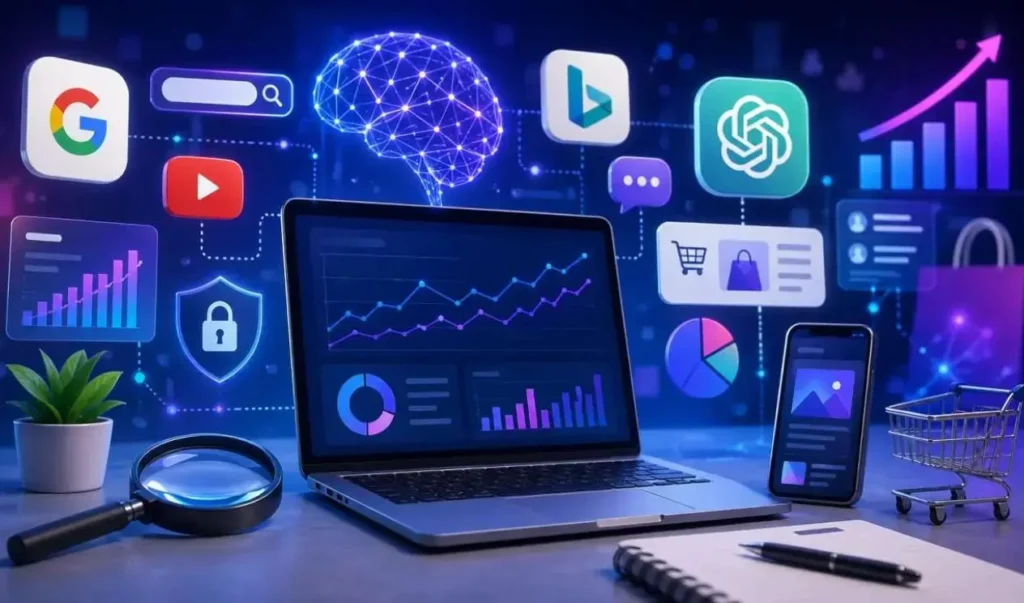
This isn’t another generic roundup copy-pasted from a search result page. We’ve actually used most of these tools across real campaigns with real budgets (and real mistakes along the way). We picked the 15 that genuinely move the needle across SEO, ads, content, and automation. Whether you run a one-person operation or manage a full agency stack, something on this list will fit your workflow. For a deeper look at how automation is reshaping marketing strategy this year, our guide on marketing automation trends is worth a read too.
How We Picked These Tools
We didn’t just type “best AI tools” into Google and copy whatever showed up first. Each tool on this list got tested, real campaigns, real budgets, a few real mistakes along the way too. Some looked brilliant on paper and fell apart the moment a deadline hit. Those got cut without much debate.
The criteria stayed simple. Does it actually save time? Does it move real results, not just vanity metrics that look nice in a report? Is pricing fair for a small team, not only built for enterprise budgets? We also dug into G2 reviews, Reddit threads (where marketers are brutally honest), and spoke to a handful of people who use these ai marketing tools every single day. No sponsored placements snuck in here. Just what genuinely works, warts and all.Best AI Tools for SEO
SEO used to mean endless keyword spreadsheets and gut-feeling guesses. Not anymore. The best ai tools for seo in 2026 actually read the SERP like a human would, then tell you exactly what’s missing from your content.
Surfer SEO remains the go-to for content scoring. Drop in a draft, and it compares your page against the top-ranking competitors, word count, headings, keyword density, even internal linking gaps. It’s blunt about weaknesses, which honestly is the point.
Semrush’s AI toolkit goes further. It doesn’t just audit your site, it predicts which keywords will trend before competitors catch on. Useful for teams planning content calendars months ahead. A bit pricey for solo creators, though, so weigh that.
Clearscope focuses purely on content optimization and semantic relevance. It pulls in LSI keywords naturally, things Google’s algorithm actually cares about, and shows you a readability score alongside grade-level analysis. Writers at our team genuinely prefer it over manual keyword stuffing.
SEO tools alone, though? They won’t carry your entire strategy around ai tools for digital marketing. You need the next pieces too. If you’re building out a content calendar, our piece on SEO content planning breaks down the process step by step.
Best AI Tools for Paid Ads & Campaign Optimization
Ad spend wastage used to be the norm, not the exception. Budgets burned on the wrong audience, bids set too high, creatives that just… didn’t land. AI changed that math considerably.
Google’s Performance Max, powered by its AI bidding engine, now handles targeting across Search, Display, YouTube and Gmail from one single campaign. It learns fast. Sometimes too fast, it can burn budget testing audiences early on, so keep an eye on the first two weeks.
Meta Advantage+ does something similar for Instagram and Facebook. It auto-generates ad variations, tests them against each other, and shifts spend toward whatever’s converting. We’ve seen CPA drop by nearly 30% on a few client accounts after switching over. Not every time, but often enough to matter.
AdCreative.ai is the newer name here, and it earns its spot. It generates dozens of ad creative variants, banners, copy, even video thumbnails, and ranks them by predicted conversion rate before you spend a rupee testing them live.
These ai marketing tools don’t replace strategy. They just remove the grunt work so you can focus on the bigger picture.Best AI Tools for Content Creation & Copywriting
Here’s the thing about content in 2026, everyone’s using ai tools for content creation now. The ones who still win are the ones pairing AI output with real human editing. Raw AI content, unedited, reads flat. Trust us on that one.
Jasper AI leads the pack for long-form content. Blog posts, landing pages, email sequences, it keeps brand voice consistent across all of it, which is harder than it sounds when five different writers touch the same campaign.
Copy.ai shines for short-form work. Ad headlines, product descriptions, social captions. It’s fast, almost too fast, so always review before publishing live.
ChatGPT needs no introduction at this point. Marketers use it for everything from brainstorming angles to drafting outlines to writing first-pass copy they then refine by hand. It’s become the default starting point for most teams we know.
Canva’s Magic Studio handles the visual side, AI-generated graphics, video edits, even brand kit suggestions pulled straight from your logo. For teams without a dedicated designer, this one’s a genuine lifesaver, honestly.
Content still needs a human pass though. Grammar quirks, factual slip-ups, a tone that just feels off, AI misses these more than people expect. Editing isn’t optional, it’s the whole job now.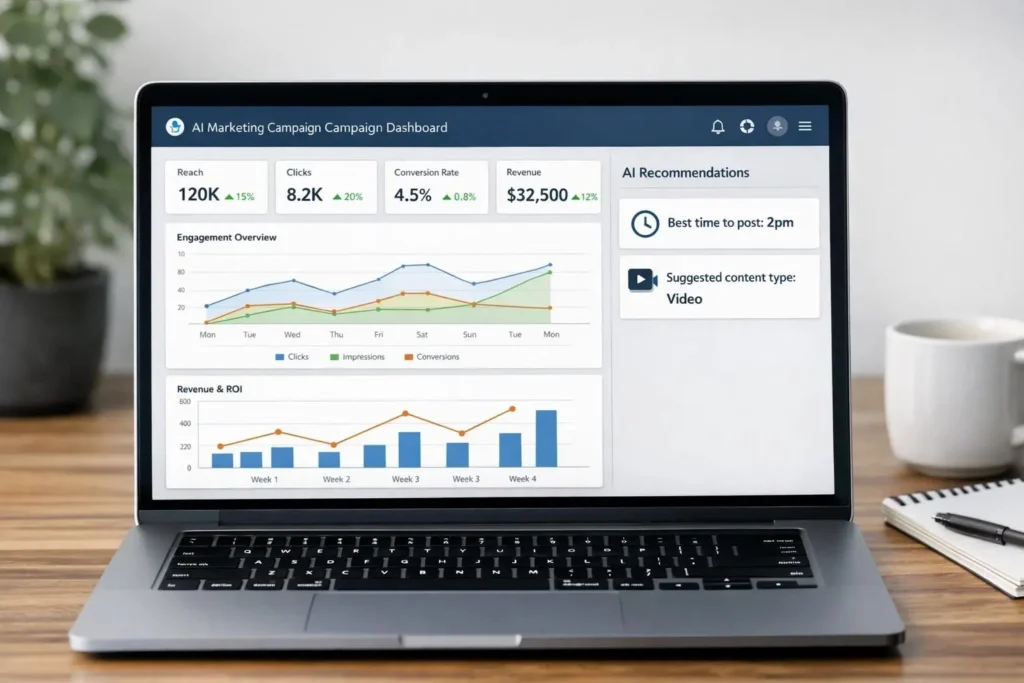
Best AI Tools for Marketing Automation & Workflow
Time. That’s what automation buys back, really. Marketers using the right ai tools for digital marketing report saving anywhere from five to fifteen hours a week, depending on how tangled their old workflow was.
HubSpot’s AI features now handle lead scoring, email send-time optimization, and chatbot conversations without much manual setup. The CRM learns patterns from past deals and nudges you toward leads actually worth chasing, instead of everyone in the pipeline equally.
Zapier’s AI automation connects apps that normally don’t talk to each other, your ad platform, your CRM, your Slack channel, and builds workflows just from a plain-English prompt. No code needed, which matters for smaller teams without a dev on staff.
ActiveCampaign combines email automation with predictive sending and behavior-based triggers. Someone abandons a cart, it sends a nudge at exactly the right hour, not a generic blast at 9 AM for everyone.
For a closer look at setting these workflows up from scratch, check our email automation guide. Automation, done right, frees up hours for actual strategy work instead of repetitive clicking.Best AI Tools for Analytics, Personalization & Social Media
Numbers tell a story. Most marketers just don’t have time to read all of it. These tools read it for you, and faster.
Sprout Social, with its AI-driven scheduling and sentiment analysis, has quietly become one of the best ai tools for social media right now. It flags when engagement is dipping before it shows up in your monthly report, and suggests the best posting windows based on your actual audience’s activity, not generic best-practice charts.
Google Analytics 4’s predictive insights go beyond basic traffic numbers. It forecasts churn probability, purchase likelihood, even revenue trends weeks out, genuinely useful for planning budget allocation ahead of a launch instead of reacting after the fact.
Together, these round out a stack that covers nearly every corner of a modern campaign. From the first keyword search to the final conversion email, there’s an AI tool watching, learning, adjusting.How to Choose the Right AI Marketing Tool for Your Business
Budget vs. Features What Actually Matters
Free Trials, Scalability & Team Size Fit
Common Mistakes Marketers Make When Adopting AI Tools
A lot of teams rush in. They buy three tools in one week, expect instant results, and get frustrated when nothing clicks by Friday. That’s not how digital marketing works, AI-powered or not. It takes setup, testing, patience.
Another mistake, maybe the bigger one, blind trust. People publish AI-written content without checking facts, dates, even basic grammar. It shows. Readers notice, and so does Google, eventually. Treat every AI output as a first draft, never a final one.
Then there’s the opposite problem too, teams who resist AI altogether, convinced it’ll replace their job or dilute creativity. That fear’s understandable, but it’s also costing them hours they’ll never get back. The marketers winning with ai tools for digital marketing right now aren’t the ones avoiding AI or blindly trusting it. They’re the ones somewhere in the middle, using it as a tool, not a replacement for judgment. That balance is really the whole game in modern digital marketing.
Final Thoughts
So, fifteen tools. That’s a lot to take in at once, we know. Don’t try all of them this week. Pick one problem, maybe it’s content, maybe it’s ad spend bleeding money, and start there. Add tools as the need shows up, not before.
Digital marketing in 2026 isn’t about replacing people with machines. It’s about freeing up the time people need to actually think, strategize, create something worth noticing. The tools on this list do the heavy lifting so your team doesn’t have to. That’s really the whole point of using ai tools for digital marketing right now, working smarter, not just harder.
Still figuring out which tools fit your specific business, or want help building a stack of AI tools for digital marketing from scratch? That’s exactly what we do at BadiyaBrand. Reach out, and let’s figure out your next move together.
FAQ
Yes, mostly. Many of these tools scale down well, free tiers and low-cost plans exist for a reason. A small business using even one or two tools well will usually outperform one ignoring AI entirely. Start small, add more as the budget allows.
Lorem ipsum dolor sit amet, consectetur adipisicing elit. Optio, neque qui velit. Magni dolorum quidem ipsam eligendi, totam, facilis laudantium cum accusamus ullam voluptatibus commodi numquam, error, est. Ea, consequatur.
No. Not even close, honestly. AI handles repetitive tasks and speeds up execution, but strategy, brand voice, and creative judgment still need a human behind the wheel. Think of it as a very capable assistant, not a replacement.
curves and immediate, visible results, which helps when you’re just getting comfortable with AI-assisted workflows.