
Table of Contents
Introduction
Search behavior has quietly shifted over the past couple of years. People still type queries into Google, but a growing number now ask ChatGPT, Perplexity, or Gemini for direct answers instead of clicking through a list of blue links. This shift has left many digital marketers with the same question: is traditional optimization still enough, or does a whole new discipline need attention now? This guide breaks down GEO vs SEO in plain terms, showing where each one works, where they overlap, and how a modern marketer should actually think about both in 2026.
This isn’t a theoretical debate happening only in marketing forums; it directly affects budgets, content calendars, and which skills a team invests in learning next. Understanding the practical differences now, before AI-driven search grows even further, puts marketers in a much stronger position than scrambling to adapt later.
What Is SEO?
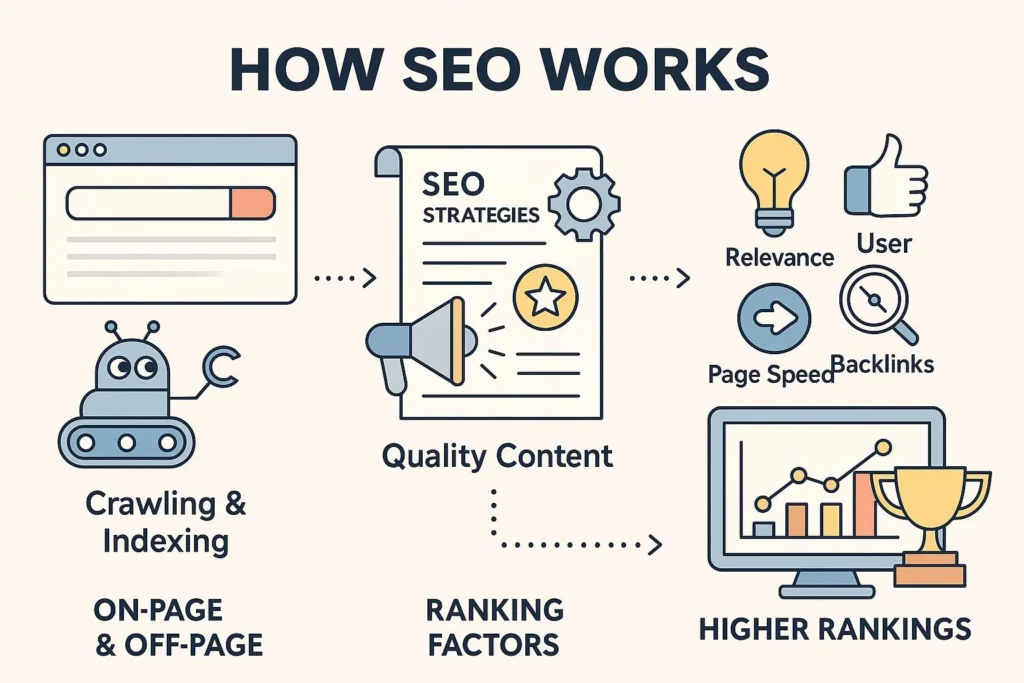
Search engine optimization is the practice of structuring and improving a website so it ranks higher on traditional search engines like Google and Bing. It has existed for over two decades and remains the backbone of how most websites earn organic traffic today.
Search engines crawl web pages, index their content, and rank them based on hundreds of signals, including relevance, page speed, backlinks, and user experience. The end goal has always been to show searchers the most useful, trustworthy result for their exact query, ranked in a scrollable list.
This discipline generally rests on three pillars: on-page factors like keywords and content quality, technical factors like site speed and mobile-friendliness, and off-page factors like backlinks and brand mentions across the web. Mastering all three together is what typically drives sustainable ranking improvements over time.
What Is GEO?
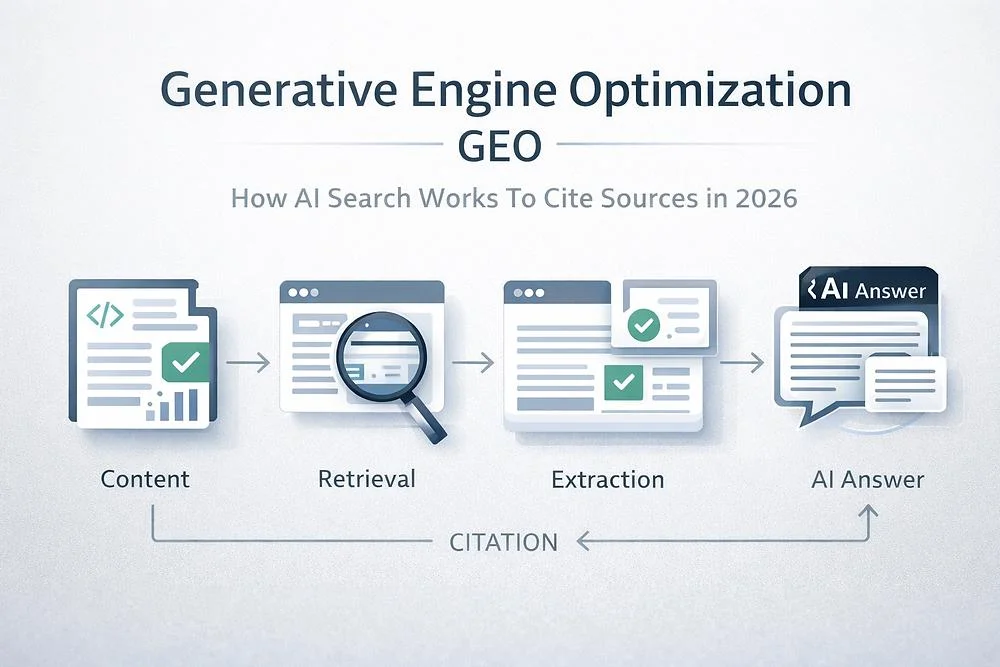
Generative Engine Optimization is the practice of structuring content so AI-driven tools like ChatGPT, Perplexity, and Google’s AI Overviews are more likely to reference, quote, or cite your brand when generating an answer. Instead of ranking in a list, your content aims to become the source an AI model pulls from directly.
These generative tools work differently from traditional crawlers. They tend to favour content that is clearly structured, directly answers a specific question, and comes from sources with strong topical authority. Rather than matching keywords exactly, they interpret meaning and context, then synthesize an answer, often pulling small citations from multiple trusted sources at once.
As more searchers began getting answers directly from AI chat interfaces without ever clicking a website link, brands realized that ranking well on Google no longer guaranteed visibility in these new answer formats. This gap is exactly why understanding GEO vs SEO has become a genuinely important conversation for marketers planning their strategy this year.
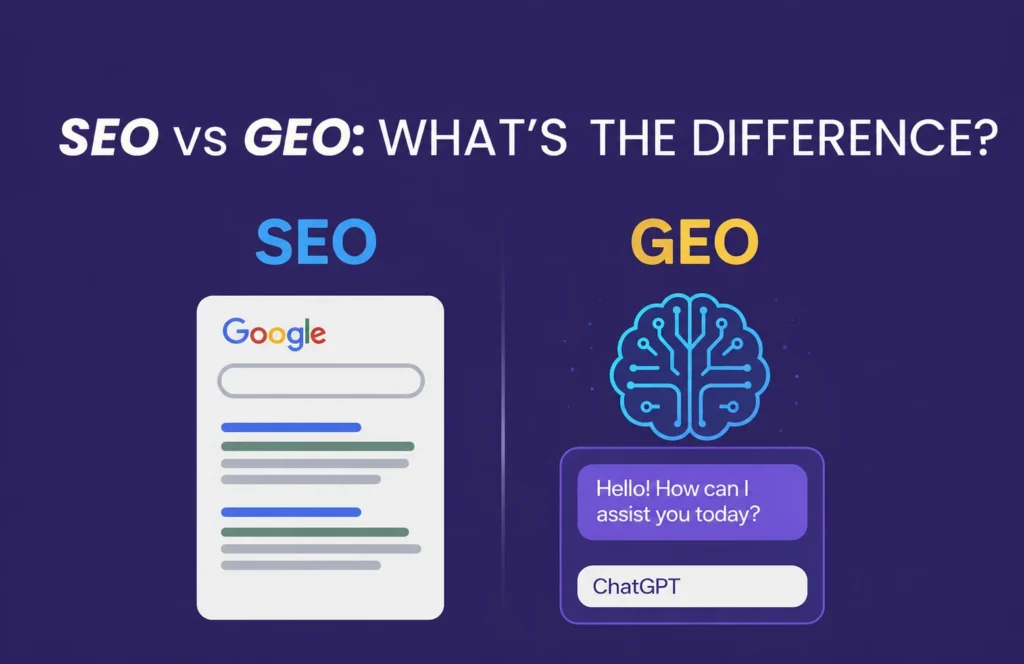
Key Differences Between the Two
Ranking vs Being Cited or Referenced
Keywords vs Context and Semantic Relevance
Click-Through Traffic vs Zero-Click Visibility
Measurement and Tracking Differences
Where the Two Approaches Overlap
Quality Content and E-E-A-T as a Shared Foundation
Technical Site Health Benefits Both
Backlinks and Authority Still Matter
Why Digital Marketers Need Both in 2026
Relying entirely on one channel is risky when search behaviour keeps shifting. Balancing both approaches spreads visibility across traditional results pages and emerging AI-driven discovery, protecting your brand from being invisible in either format. Marketers who understand GEO vs SEO as two channels feeding the same overall goal, rather than competing strategies, tend to build far more resilient visibility plans.
As more searchers adopt AI tools as their default starting point, brands absent from generative answers risk losing relevance with an entire segment of increasingly AI-first users, regardless of how well they still rank traditionally.
Consider a common informational query that now triggers an AI overview directly on the results page. A brand ranking first organically may still lose a chunk of clicks if the AI summary answers the question without citing them at all, showing exactly why this comparison matters practically, not just theoretically.
How to Build a Strategy That Balances Both
Clear headings, direct answers near the top of a section, and well-organized information make content easier for both human readers and AI systems to understand and reuse accurately.
Adding schema markup helps search engines and AI tools understand context more precisely, increasing the chances your content gets accurately represented wherever it’s discovered.
Original research, clear expertise, and well-supported claims make content more likely to be cited by generative engines, while also strengthening traditional authority signals at the same time.
A few practical habits help balance both approaches without duplicating effort:
- Answer the core question clearly within the first few lines of each section
- Use structured headings that mirror how people actually phrase questions
- Support claims with credible data or firsthand experience
- Keep technical site performance consistently strong
Conclusion
Choosing between GEO vs SEO isn’t really the right framing at all; the smarter approach treats them as complementary parts of one modern visibility strategy. Traditional optimization still drives the majority of website traffic today, while the newer discipline protects your brand’s presence as AI-driven search continues growing. Marketers who understand and invest in both now will be far better positioned than those waiting to catch up later.
If figuring out how to balance both feels overwhelming alongside everything else on your plate, BadiyaBrand can build a combined strategy that strengthens your traditional rankings while positioning your brand for AI-driven visibility too. The team stays on top of how GEO vs SEO priorities shift each quarter, so you don’t have to track it alone. Reach out to BadiyaBrand today and make sure your brand shows up however people choose to search.